TRE GLI APPUNTAMENTI IMPORTANTI PER MICHELANGELO CONSANI NEL CORSO DELLA PRIMA PARTE DEL 2014: UNA MOSTRA PERSONALE A TOKYO, LA PARTECIPAZIONE AL LANCIO DI UNA PIATTAFORMA ONLINE A PARIGI E LA MOSTRA PERSONALE, A MAGGIO, PRESSO ZIRKUMFLEX, BERLINO, A CURA DI KUNSTVEREIN (MILANO). TRE APPUNTAMENTI CHE COSTITUISCONO AFFONDI E OCCASIONI DI PRESENTAZIONE DI UNA NUOVA FASE DI LAVORO CHE VEDE, URGENTE PER L’ARTISTA, LA STRETTA RELAZIONE TRA IDEA E FORMALIZZAZIONE DELL’OPERA IN PROCESSI CHE RIGUARDANO LA RESPONSABILITÀ E LA SOSTENIBILITÀ DELL’ARTE NEL TEMPO PRESENTE.
Gli appuntamenti espositivi di Michelangelo Consani sono spesso altrettanti giri di boa di un’analisi lucida e coerente, i cardini su cui gira il pensiero espresso da certi dispositivi visivi che, in un processo di archiviazione e di rinnovamento dell’immagine-documento, ci consentono di incontrare figure di riferimento chiamate come testimoni di un’urgenza polemica che reclama azioni sostenibili in senso ambientale ed etico complessivo, essi stessi protagonisti di una sintesi per immagini di momenti storici. Ma da cosa è fatta la storia, quali sono i documenti che la certificano e su cui si costruisce nella coscienza collettiva? Frequentemente ciò che rimane della storia sono i resti delle azioni dell’uomo intese come detriti di processi, azioni inutili, dispersioni di energia.
Nessun lavoro presentato nell’ambito della personale Ancora ancora la nave in porto al CAMeC pianozero di La Spezia (2011) avrebbe potuto essere poi venduto. Nelle due collettive consecutive organizzate a Casa Masaccio di San Giovanni Valdarno (2013) uno era il lavoro presentato per entrambe, pensato come sostenibilmente capace di trasformarsi – attraverso variazioni di collocazione e relazione con altre opere – e assumere significati che transitavano da una mostra all’altra.
Queste due operazioni restringono il focus della questione: dalla resa visiva di argomenti che riguardano l’interrogativo sulla decrescita globale e sulla crisi attraversata negli ultimi anni da economia e idee alla necessità, urgente, di appoggiare il pensiero dell’arte e la produzione di pensiero attraverso l’arte sull’idea di sostenibilità. E, restringendo ulteriormente il fuoco: quale è il ruolo dell’artista e dell’arte nell’attuale contesto storico? La scommessa è quella di creare, anche attraverso le pratiche artistiche, dispositivi utili alla collettività individuando possibili nicchie di pensiero alternativo alle filosofie, comportamenti e azioni che hanno, in maniera stereotipata, costruito gli orizzonti critici del pensiero e dell’azione contemporanea.
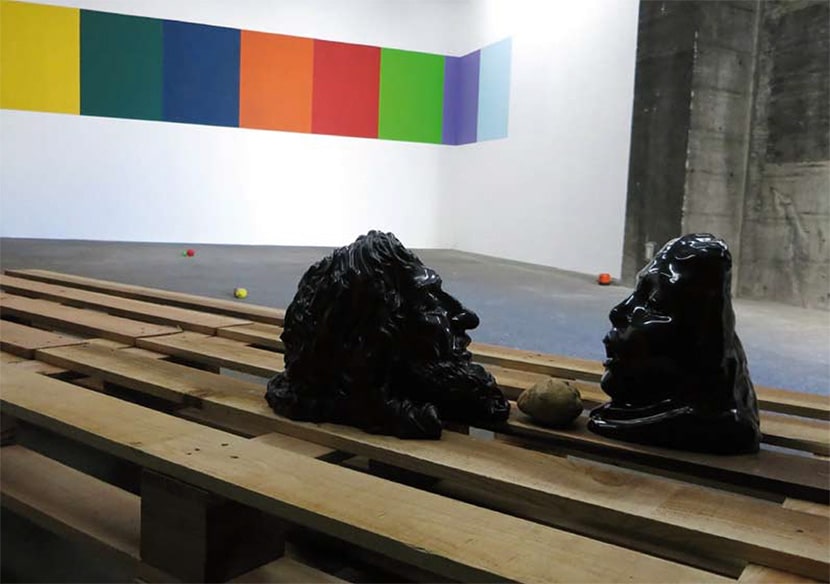
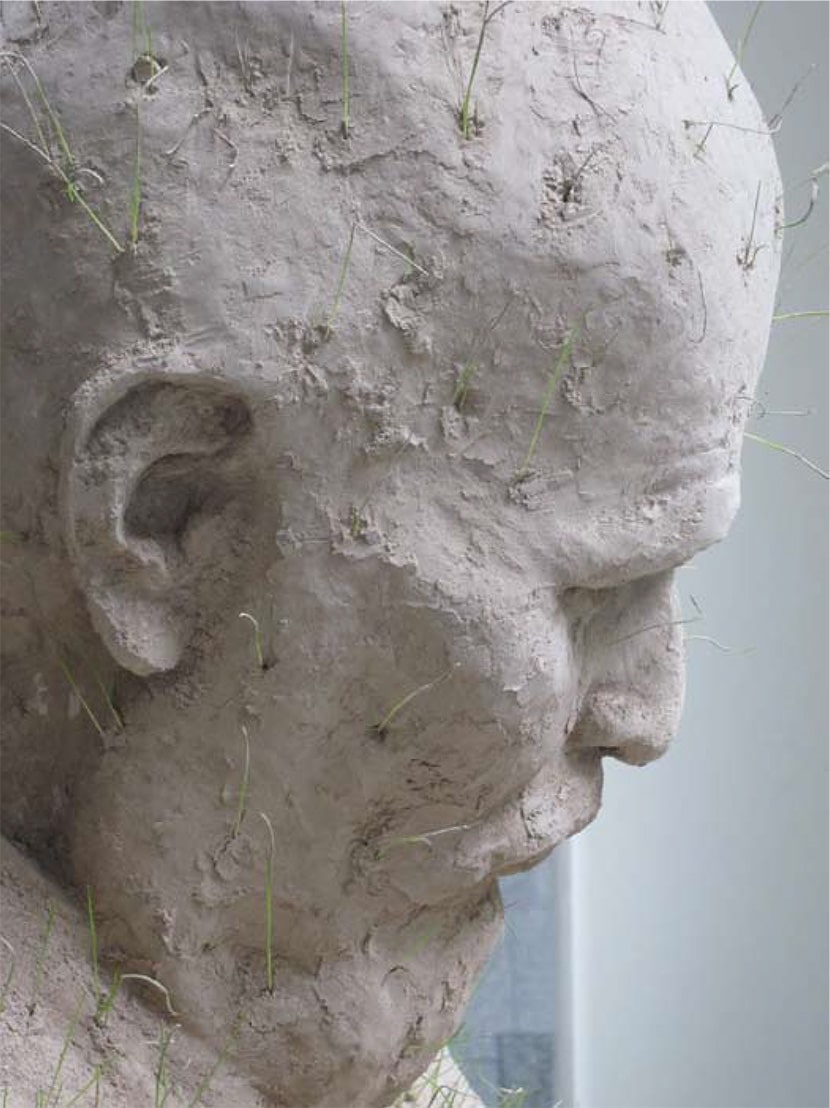
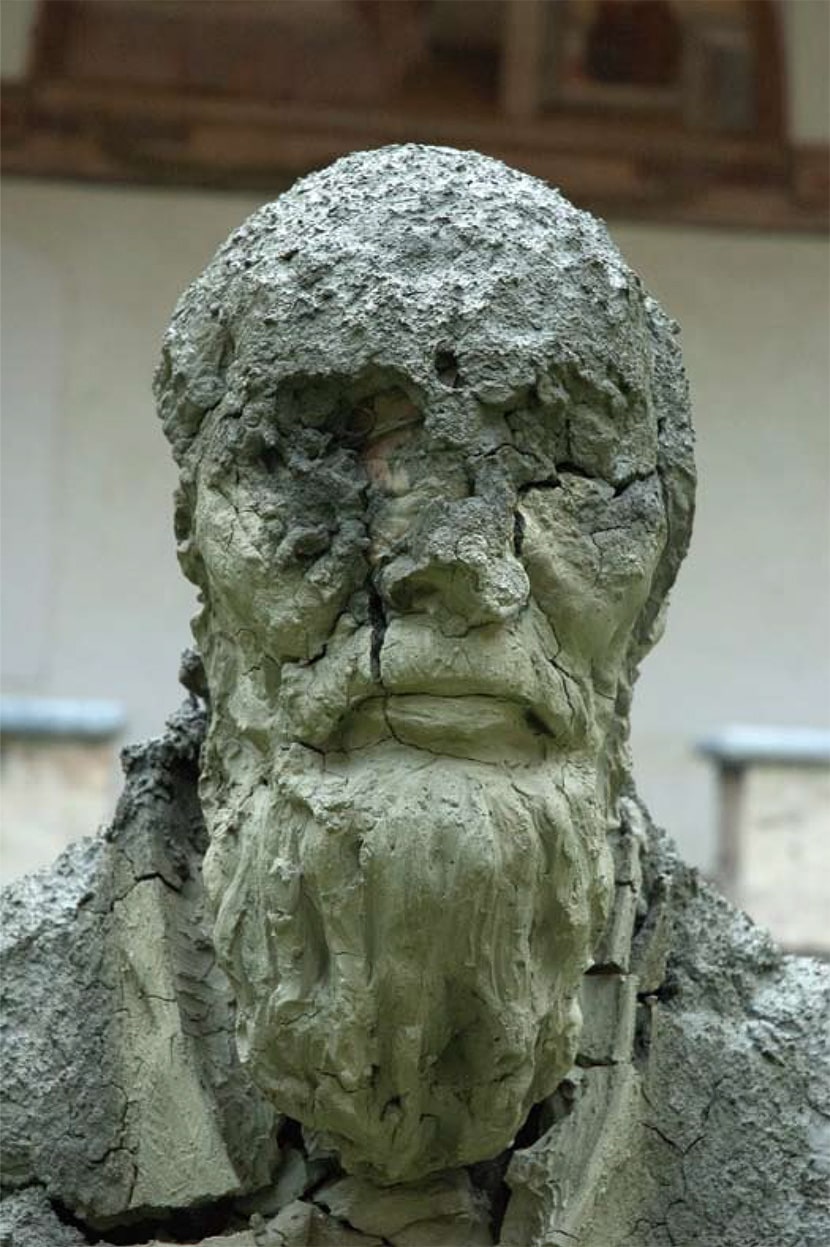
Nella mostra personale Nove elefanti bianchi e una patata, tenutasi presso la Gallery Side 2 di Tokyo, nove personaggi si danno appuntamento in un luogo di congiunzione tra Europa ed Asia, la depressione caspica. Gli strumenti dati dall’artista per immaginare questo spazio geografico sono il centro, occupato da due teste scolpite in nobile marmo del Belgio – che echeggiano forme, iconografie e linguaggi della storia dell’arte occidentale, gli elefanti bianchi, simbolo di buon auspicio in Asia e Indocina, appellativo che nei Paesi anglosassoni viene dato a progetti particolarmente impegnativi destinati a non dare un pari risultato economico – e oggetti intesi come bussole: quattro scarti di produzione di ceramica e di legno a certificare i punti cardinali.
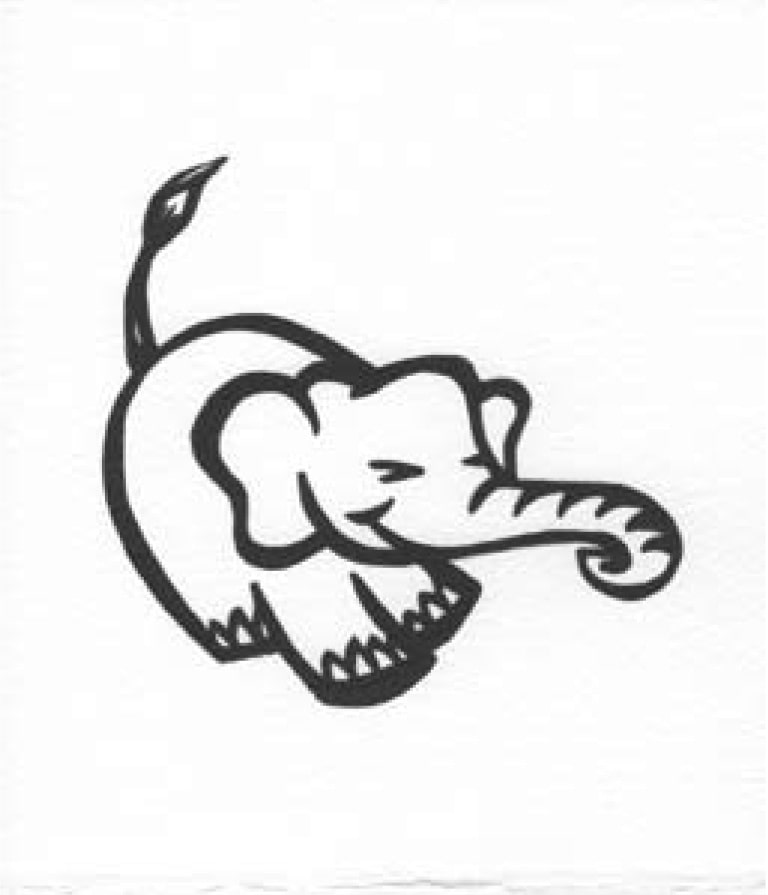
Sulla trama immaginaria di percorsi che si saldano nelle due teste scolpite si dispongono nove patate colorate, tracce o esistenze nel mondo dei nove personaggi da ascoltarsi come testimoni, chiavi di volta di un’alternativa in ingegneria, scienza, pseudoscienza, musica, filosofia, agricoltura, biologia, architettura, poesia. Sulle pareti nove ritratti dei testimoni tracciati in doppio linguaggio. Nove gesti segni (inchiostro e carta giapponese), non descrizione ma dichiarazione di assunzione di responsabilità, e, in contrapposizione, altrettanti disegni di elefanti scaricati da Internet, le tipiche silhouette pronte per essere poi riempite di colore dai bambini. La forma-stereotipo è lontana dalla forma-gesto che è ascolto e interpretazione.
I colori dell’arcobaleno che caratterizzano la valvola per i terremoti, il progetto pseudoscientifico di Pier Luigi Ighina (uno dei testimoni) – una sorta di “valvola di sfiato” per i campi elettrostatici – sono squadernati sulla parete della galleria che comunica sull’esterno, una sorta di via di fuga dopo un percorso di apprendimento e condivisione del pensiero alternativo a quello che ha costruito i nostri strumenti di conoscenza e rappresentazione del mondo.
Quel mondo per immagini, così come i media le hanno comunicate alla nostra coscienza e hanno plasmato la nostra memoria e percezione della storia, scorre in quelle scelte da Consani per il progetto Past forward, la piattaforma online ideata da Francesca Zappia. Negli spazi di Glassbox, a Parigi, Michelangelo Consani e Jean-Philippe Convert sono stati invitati al lancio della piattaforma e a presentare un’opera collegata al progetto online. Se sul sito le immagini – dal lancio dello Sputnik al virus dell’influenza – scorrono veloci fino ad arrivare al bianco, per la presentazione del progetto Consani, riprendendo un lavoro presentato nel 2010 presso la Fondazione Pistoletto, assembla le immagini in forma di stella tridimensionale, posizionandola – quasi abbandonandola – in un angolo dello spazio a certificare come la storia debba diventare reale e tangibile, rivista e liberata da prospettive, in grado di restituirci la capacità critica di lettura del presente mettendoci in grado di consegnare le nostre azioni al futuro.
Arte e Critica, n. 78, estate 2014, pp. 50-52.
MICHELANGELO CONSANI: THE WHITE ELEPHANTS AND THE POTATOES
THREE ARE THE IMPORTANT EVENTS FOR MICHELANGELO CONSANI OVER THE FIRST HALF OF 2014: A SOLO EXHIBITION IN TOKYO, THE PARTICIPATION IN THE LAUNCH OF AN ONLINE PLATFORM IN PARIS AND A SOLO SHOW IN MAY, AT ZIRKUMFLEX, BERLIN, CURATED BY KUNSTVEREIN (MILAN). THREE EVENTS THAT ARE CRITICAL ATTACKS AND OCCASIONS FOR PRESENTING A NEW PHASE OF WORK THAT SEES, URGENT FOR THE ARTIST, THE CLOSE RELATIONSHIP BETWEEN THE IDEA AND THE FORMALIZATION OF THE ARTWORK IN PROCESSES THAT DEAL WITH THE RESPONSIBILITY AND SUSTAINABILITY OF ART IN PRESENT TIMES.
Michelangelo Consani’s exhibition events are often turning points of a lucid and coherent analysis, the cornerstones on which the thinking expressed by certain visual contrivances turns. These latter, in a process of archiving and renewal of the image-document, enable us to meet reference figures called as witnesses to a polemic urgency that demands sustainable actions in an environmental and ethical general sense, figures that are themselves protagonists of a synthesis in images of historical moments. But what is history made up of? What are the documents that attest it and on which the collective consciousness is built? Often, what remains of history are the remainders of man’s actions meant as residues of processes, useless actions, waste of energy.
None of the works presented in the solo show Ancora ancora la nave in porto at the CAMeC pianozero in La Spezia (2011) could have been then sold. In the two consecutive group exhibitions at Casa Masaccio in San Giovanni Valdarno (2013) a single work was presented for both shows, conceived as sustainably capable of transforming – through changes of collocation and relationship with other works – and to take on meanings that moved from one exhibition to another.
These two operations narrow the focus of the question: from the visual result of issues concerning the question of global degrowth and the crisis that economy and ideas have undergone in recent years to the urgent need to base art thinking and the production of thinking through art on the idea of sustainability. And, narrowing the focus further: what is the role of the artist and of art in the current historical context? The challenge is to create, also through artistic practices, systems that are useful to the collectivity by pinpointing possible niches of alternative thinking to philosophies, behaviours and actions that have, in a stereotyped way, constructed the critical horizons of contemporary thinking and action.
In the solo exhibition Nove elefanti bianchi e una patata held at Gallery Side 2 in Tokyo, nine characters arrange to meet in a junction area between Europe and Asia, the Caspian Depression. The instruments given by the artist to imagine this geographical area are the center, occupied by two heads in noble Belgian marble – which evokes shapes, iconographies and languages of Western art history, the white elephants, a symbol of good luck in Asia and Indochina, a name that, on the contrary, in Anglophone countries is given to particularly demanding projects that are not expected to give an equal economic result – and objects intended as compasses: four production scraps in ceramics and wood to indicate the cardinal points.
On the imaginary weave of paths that join together in the two carved heads, nine coloured potatoes are arranged, traces or presences in the world of the nine characters to listen to as witnesses, keys to an alternative in engineering, science, pseudoscience, music, philosophy, agriculture, biology, architecture and poetry. Nine portraits of the witnesses traced in a double language are on the walls. Nine gesture-signs (ink and Japanese paper), not a description but a statement of acceptance of responsibility and, in contrast, as many drawings of elephants downloaded from the internet, the typical silhouettes ready to be filled in with colour by children. The stereotype-form is far from the gesture-form that is listening and interpretation.
The colours of the rainbow that characterize the valve for the earthquakes, the pseudoscientific project by Pier Luigi Ighina (one of the witnesses) – a sort of “relief valve” for electrostatic fields – are spread out on the gallery wall that communicates with the outside, a sort of way out after a path of learning and sharing of the alternative thinking to the thinking that has built our instruments of knowledge and representation of the world.
That world in images, as the media have communicated them to our consciousness and have shaped our memory and perception of history, flows in those pictures chosen by Consani for the project Past forward, the online platform conceived by Francesca Zappia. In the spaces of Glassbox, in Paris, Michelangelo Consani and Jean-Philippe Convert were invited to the launch of the platform and to present a work related to the online project. If on the website the images – from the Sputnik launch to the flu virus – flow fast until reaching the white, for the presentation of the project Consani, revisiting a work presented at the Fondazione Pistoletto in 2010, assembled the images in the form of a three-dimensional star, placing it – almost abandoning it – in a corner of the space to indicate how history must become real and tangible, revised and freed from perspectives, capable of giving us back the skill of critical reading of the present, enabling us to deliver our actions to the future.
Michelangelo Consani’s exhibition events are often turning points of a lucid and coherent analysis, the cornerstones on which the thinking expressed by certain visual contrivances turns. These latter, in a process of archiving and renewal of the image-document, enable us to meet reference figures called as witnesses to a polemic urgency that demands sustainable actions in an environmental and ethical general sense, figures that are themselves protagonists of a synthesis in images of historical moments. But what is history made up of? What are the documents that attest it and on which the collective consciousness is built? Often, what remains of history are the remainders of man’s actions meant as residues of processes, useless actions, waste of energy.
None of the works presented in the solo show Ancora ancora la nave in portoat the CAMeC pianozero in La Spezia (2011) could have been then sold. In the two consecutive group exhibitions at Casa Masaccio in San Giovanni Valdarno (2013) a single work was presented for both shows, conceived as sustainably capable of transforming – through changes of collocation and relationship with other works – and to take on meanings that moved from one exhibition to another.
These two operations narrow the focus of the question: from the visual result of issues concerning the question of global degrowth and the crisis that economy and ideas have undergone in recent years to the urgent need to base art thinking and the production of thinking through art on the idea of sustainability. And, narrowing the focus further: what is the role of the artist and of art in the current historical context? The challenge is to create, also through artistic practices, systems that are useful to the collectivity by pinpointing possible niches of alternative thinking to philosophies, behaviours and actions that have, in a stereotyped way, constructed the critical horizons of contemporary thinking and action.
In the solo exhibition Nove elefanti bianchi e una patata held at Gallery Side 2 in Tokyo, nine characters arrange to meet in a junction area between Europe and Asia, the Caspian Depression. The instruments given by the artist to imagine this geographical area are the center, occupied by two heads in noble Belgian marble – which evokes shapes, iconographies and languages of Western art history, the white elephants, a symbol of good luck in Asia and Indochina, a name that, on the contrary, in Anglophone countries is given to particularly demanding projects that are not expected to give an equal economic result – and objects intended as compasses: four production scraps in ceramics and wood to indicate the cardinal points.
On the imaginary weave of paths that join together in the two carved heads, nine coloured potatoes are arranged, traces or presences in the world of the nine characters to listen to as witnesses, keys to an alternative in engineering, science, pseudoscience, music, philosophy, agriculture, biology, architecture and poetry. Nine portraits of the witnesses traced in a double language are on the walls. Nine gesture-signs (ink and Japanese paper), not a description but a statement of acceptance of responsibility and, in contrast, as many drawings of elephants downloaded from the internet, the typical silhouettes ready to be filled in with colour by children. The stereotype-form is far from the gesture-form that is listening and interpretation.
The colours of the rainbow that characterize the valve for the earthquakes, the pseudoscientific project by Pier Luigi Ighina (one of the witnesses) – a sort of “relief valve” for electrostatic fields – are spread out on the gallery wall that communicates with the outside, a sort of way out after a path of learning and sharing of the alternative thinking to the thinking that has built our instruments of knowledge and representation of the world.
That world in images, as the media have communicated them to our consciousness and have shaped our memory and perception of history, flows in those pictures chosen by Consani for the project Past forward, the online platform conceived by Francesca Zappia. In the spaces of Glassbox, in Paris, Michelangelo Consani and Jean-Philippe Convert were invited to the launch of the platform and to present a work related to the online project. If on the website the images – from the Sputnik launch to the flu virus – flow fast until reaching the white, for the presentation of the project Consani, revisiting a work presented at the Fondazione Pistoletto in 2010, assembled the images in the form of a three-dimensional star, placing it – almost abandoning it – in a corner of the space to indicate how history must become real and tangible, revised and freed from perspectives, capable of giving us back the skill of critical reading of the present, enabling us to deliver our actions to the future.
Arte e Critica, no. 78, Summer 2014, 50-52.