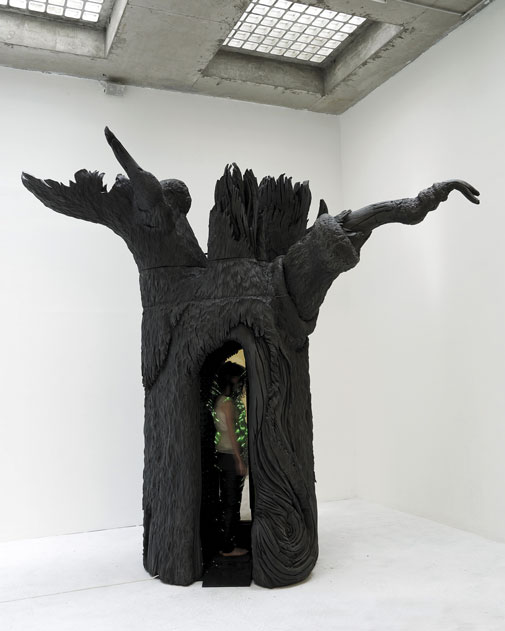
«L’artista è naturalmente critico, implicitamente critico, proprio per la sua struttura creativa», postula Carla Lonzi nel suo noto volume Autoritratto (De Donato Editore, Bari 1969, p.6). Che gli artisti siano capaci di operare una riflessione critica sul proprio lavoro è dimostrato anche dai loro scritti inediti o redatti per pubblicazioni specifiche, nonché dalle dichiarazioni rilasciate in occasione di interviste o incontri pubblici. Qualora questi materiali siano poi raccolti in volumi antologici di scritti e interviste, il Kunstwollen che presiede la creazione di ogni autore emerge ancor più chiaramente.
Tra tali volumi possiamo ora annoverare anche La mia biopolitica. Arte e lotte del vivente (Giampaolo Prearo Editore, Milano 2016), una raccolta di scritti e interviste dell’artista torinese Piero Gilardi che fin dai suoi esordi negli anni sessanta ha scelto la scrittura quale strumento per capire se stesso, gli altri e la realtà che ci circonda. Nel 1967 interruppe addirittura la pratica artistica per dedicarsi alla cronaca d’arte e alla riflessione teorica: entrando in contatto durante i suoi numerosi viaggi con i primi fermenti postminimalisti europei e oltreoceanici, ebbe la lungimiranza di coglierli e documentarli in articoli pubblicati su «Flash Art». Ed è sempre mediante la scrittura che negli stessi anni non solo dichiarò l’esistenza di un comune denominatore tra le ricerche al di qua e al di là dell’Atlantico, riunendole sotto la denominazione di “arte microemotiva”, ma influì anche sull’ideazione delle rassegne Op Losse Schroeven (Stedelijk Museum, Amsterdam) e When Attitudes Become Form (Kunsthalle, Berna), curate nel 1969 rispettivamente da Wim Beeren e Harald Szeemann. Il fatto che tutt’oggi lo Stedelijk Museum esponga parte delle lettere di Gilardi a Beeren dimostra quanto i suoi scritti siano di indubbio valore nell’ambito dell’intero suo percorso.
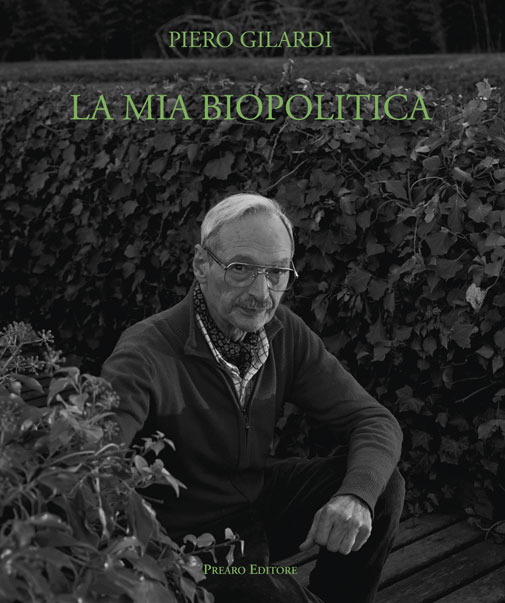
La scrittura rimane onnipresente anche dopo il ritorno alla produzione artistica avvenuto nel 1981. Proprio in quell’anno esce infatti il volume Dall’arte alla vita, dalla vita all’arte (La Salamandra, Milano 1981) in cui Gilardi, come farà nel successivo Not for sale (Mazzotta Editore, Milano 2000), racconta il suo iter artistico-ideologico fino a quel momento. Come egli tiene a sottolineare, la narrazione sviluppata nelle succitate due pubblicazioni trova una sorta di terzo capitolo nella raccolta di scritti e interviste edita da Prearo: «periodicamente ho pubblicato un libro per parlare dei processi di cambiamento artistici, socioculturali e politici, ma anche per condividere le mie esperienze, le quali sottendono una verità: è possibile cambiare il mondo con un lavoro di tessitura all’interno della società. Il mio recente libro di scritti, in particolare, vuole essere un incoraggiamento soprattutto per le nuove generazioni affinché non si scoraggino di fronte alla realtà attuale».1
La mia biopolitica da un lato porta infatti in luce il senso culturale, politico e antropologico delle esperienze compiute dall’artista dal 2000 ad oggi, dall’altro rende consapevole il lettore della necessità di un modello di sviluppo che si esprima attraverso una creazione basata sull’interazione con altri artefici di forme di vita quotidiana (ad esempio, gli agricoltori) e integrata nel continuum evolutivo organico di tutto ciò che è vivente (piante, animali, individui, etc.). Da qui il titolo del volume che fa riferimento al concetto di biopolitica definito da Michel Foucault come il terreno di incontro tra la rete di poteri propria della società capitalistica e la sfera del vivente. Per Gilardi la biopolitica è una “politica del vivente”: uno strumento atto a realizzare un’arte intesa come un interscambio tra gli artisti e i collettivi ecologici allo scopo di operare una conversione del modello produttivo-energetico postcapitalistico che conduca alla costruzione di una nuova democrazia per la gestione dei beni comuni. «L’uomo deve mettersi sullo stesso piano di tutte le altre tipologie di esseri viventi e abbandonare le gerarchie proprie del pensiero antropocentrico», egli spiega: «tutto ciò che appartiene alla biosfera è la guida per affrontare i problemi attuali e futuri». La mia biopolitica si propone proprio di sistematizzare il percorso che dal 1963, anno della sua prima personale alla Galleria L’Immagine di Torino, al 2014 ha condotto l’artista a tale convinzione, già sottesa nel 2008 nella realizzazione del PAV – Parco Arte Vivente di Torino.
La curatela del libro è stata affidata a Tommaso Trini, che nel 1967 aveva intervistato Gilardi in occasione dell’inchiesta Tecniche e materiali pubblicata su «Marcatré» e che negli anni ottanta aveva condiviso il suo stesso interesse per le tecnoscienze, curando nel 1986 la Biennale di Venezia dal titolo Arte e scienza, biologia, tecnologia e informatica. Particolare è la scelta da parte di Trini di isolare all’inizio del volume tre testi redatti dall’artista rispettivamente nel 1967, 1986 e 2014 denominandoli “Preletture”. Il primo, Il mistero dell’energia, narra l’immaginaria protesta dei neuroni contro le onde elettrochimiche. Puntualizza Gilardi: «si tratta di una metafora basata sulla neurobiologia volta ad attestare l’emergere, alla fine degli anni sessanta, di una nuova soggettività per cui gli individui iniziavano a non sentirsi più ingranaggi della società fordista, gerarchica e passivizzante, ma soggetti con il diritto a comunicare con gli altri». L’importanza della relazione con gli altri trova ulteriore sviluppo nella seconda “Prelettura”, Stop Pollution, che riferisce di un’esperienza di creatività collettiva. Convinto che la creatività trovi il proprio alveo naturale in una società in cui si ragiona in termini di autogoverno, negli anni ottanta Gilardi soggiornò come animatore di gruppi creativi nelle riserve degli indiani americani che avevano lottato per non sottostare a un potere esterno: «ho scelto di fare esperienza delle comunità tribali per verificare se la creatività collettiva fosse una tendenza universale. Davo loro degli stimoli per tirare fuori il proprio vissuto profondo e la propria creatività». È a seguito di tale centralità conferita all’interazione con l’altro, inteso in senso sempre più universale, che Gilardi giunge a concepire il PAV, la cui genesi viene da lui descritta nella terza “Prelettura” intitolata Il progetto di una vita.
Alle tre “Preletture”, accomunate dal concetto di interrelazione tra l’io e l’altro, seguono tutti gli altri scritti e interviste che Trini ha scelto di suddividere in quattro capitoli tematici corrispondenti agli altrettanti fili rossi riscontrabili nel percorso dell’autore (La dialettica arte-natura, Biopolitica e maxilotte, Arte-scienza-tecnologia), unendo poi ciascuno ad una sezione di “Narrazioni critiche” generali. Si tratta non solo di testi sovente già pubblicati in riviste, cataloghi e monografie, ma anche di lettere a critici e ad artisti, di interviste, nonché di passi selezionati dal diario redatto da Gilardi nel 1967-68 da New York e dall’Olanda. Dalla lettura di tutti questi materiali, risulta evidente come Piero Gilardi sia soprattutto un intellettuale e pensatore che fin dai suoi esordi è stato capace di captare e poi di descrivere attraverso la scrittura gli sviluppi artistici, culturali e sociali della realtà coeva, scuotendo così la coscienza collettiva e indicando di volta in volta possibili vie da percorrere. Nasce però spontanea una domanda: ma se l’arte di oggigiorno deve nascere da un’ibridazione di politica, filosofia, psicologia, ecologia, natura, tecnologia e scienza, il pensatore Gilardi come definirebbe l’artista atto a crearla? «Nell’epoca odierna», risponde prontamente, «l’artista è relazionale; sente cioè l’esigenza di socializzare la propria creatività, poiché consapevole che essa acquisisce un senso solo se condivisa con gli altri» in un processo di co-creazione.
Se in conclusione volessimo riassumere il pensiero di fondo sotteso dal volume La mia biopolitica, potremmo forse dire semplicemente che per Gilardi l’arte è un’operazione di sempre più profonda ibridazione tra l’io e tutto ciò che sta al di fuori di esso, senza gerarchie né differenziazioni.
Arte e Critica, n. 85, primavera – estate 2016, pp. 72-75.
1. Le dichiarazioni di Piero Gilardi contenute in questo testo provengono da un’intervista da me effettuata presso il suo studio a Torino il 18 aprile 2016.
PIERO GILARDI AND THE “BIOPOLITICS OF THE LIVING”. WRITINGS FROM 1963 TO 2014
“The artist is critical by his nature, implicitly critical, precisely because of his creative structure,” Carla Lonzi postulates in her famous volume Autoritratto [Self-portrait] (De Donato Editore, Bari 1969, p.6). The fact that artists are able to carry out a critical reflection on their own work is also evidenced by their unpublished writings, or those which are written for specific publications, as well as by the statements issued on the occasion of interviews or public encounters. If these materials are then gathered in anthological volumes of writings and interviews, the Kunstwollen that presides over the creation by each author emerges even more clearly.
Among the volumes we can also include La mia biopolitica. Arte e lotte del vivente [My Biopolitics, Art and Battles of Life] (Giampaolo Prearo Editore, Milan 2016), a collection of writings and interviews by the Turin artist Piero Gilardi who since the beginning in the 1960s has chosen writing as a tool for understanding himself, others and the reality that surrounds us. In 1967 he interrupted his artistic practice in order to devote himself to the art chronicles and theoretical reflection: getting in touch, during his numerous journeys, with the first European and overseas post-minimalist ferments, he was farsighted enough to understand and document them in articles published in “Flash Art”. And it is always through writing that in the same years he not only declared the existence of a common denominator between the researches on this side and on the other side of the Atlantic, gathering them under the denomination of “micro-emotional art”, but also influenced the conception of the exhibitions Op Losse Schroeven (Stedelijk Museum, Amsterdam) and When Attitudes Become Form (Kunsthalle, Bern), curated respectively by Wim Beeren and Harald Szeemann. The fact that still today the Stedelijk Museum exhibits part of Gilardi’s letters to Beeren shows how much his writings are of undeniable value in the frame of his entire research.
Writing remains omnipresent also after the return to artistic production in 1981. Precisely in that year, in fact, the volume Dall’arte alla vita, dalla vita all’arte [From Art to Life, from Life to Art] (La Salamandra, Milan 1981) was published, in which Gilardi, as he was to do in the following Not for sale (Mazzotta Editore, Milan 2000), talks about his artistic-ideological iter up to that moment.
As he likes to highlight, the narration developed in the two above mentioned publications finds a kind of third chapter in the collection of writings and interviews published by Prearo: “I have periodically published a book to talk about the artistic, socio-cultural, political processes of change, but also to share my experiences, which imply a truth: it is possible to change the world through a work of weaving within society. My recent book of writings, in particular, wants to be an encouragement above all for the new generations so that they don’t become discouraged in front of the current reality.” 1
On the one hand, in fact, La mia biopolitica [My Bioplitics] brings to light the cultural, political and anthropological sense of the experiences that the artist has had from 2000 to date, while on the other it makes the reader aware of the need of a model of development that can be expressed through a creation based on the interaction with other creators of forms of everyday life (for instance, farmers) and integrated into the organic evolutionary continuum of everything that is living (plants, animals, individuals, etc.). Hence the title of the volume that refers to the concept of biopolitics defined by Michel Foucault as the terrain of encounter between the network of powers typical of capitalist society and the sphere of the living. Biopolitics is for Gilardi a “politics of the living”: an instrument that is suitable to make an art meant as an interchange between artists and ecologic collectives in order to carry out a conversion of the post-capitalist productive-energetic model that could lead to the construction of a new democracy for the management of common goods. “Man has to put himself on an equal footing with all other kinds of living beings and to abandon hierarchies typical of anthropocentric thinking”, he explains: “all that belongs to the biosphere is the guide to address the current and future problems.” La mia bipolitica precisely aims at systematizing the path that from 1963, the year of his first solo exhibition at the Galleria L’Immagine in Turin, to 2014 led the artist to this belief, which was already implied in the realization of the PAV – Parco Arte Vivente in Turin in 2008.
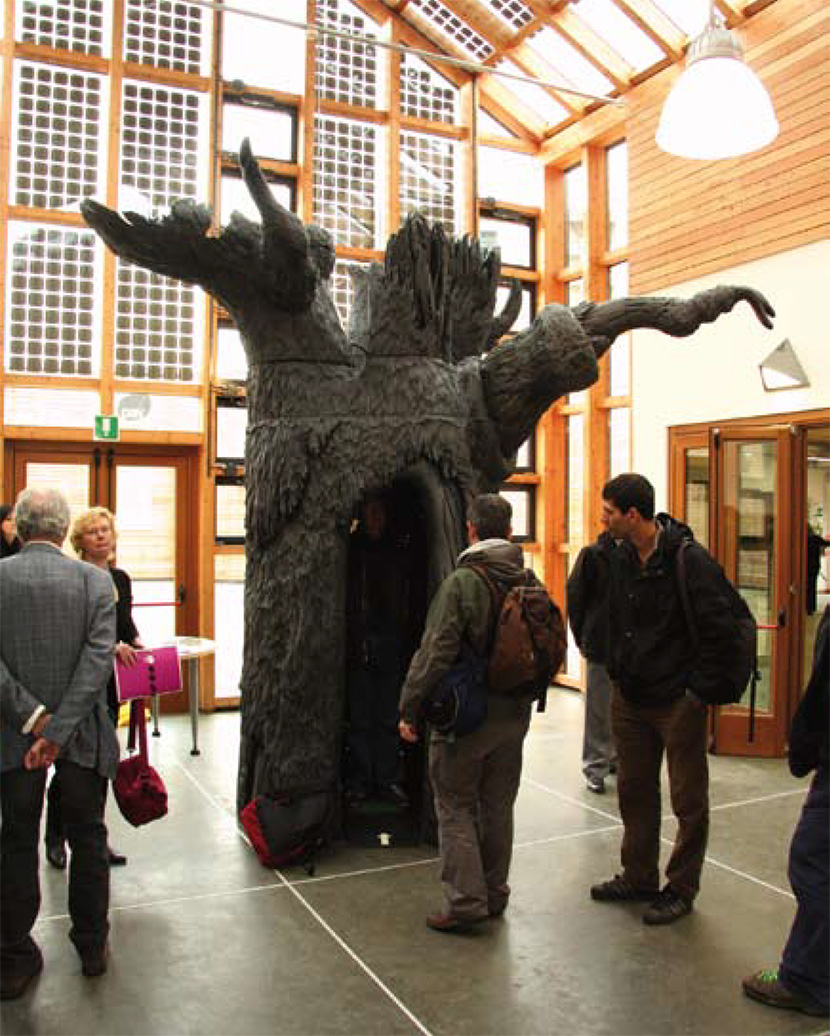
The editing of the book was entrusted to Tommaso Trini, who in 1967 had interviewed Gilardi on the occasion of the survey Tecniche e materiali [Techniques and Materials] published in “Marcatré” and who in the 1980s had shared his very same interest for technosciences, curating in 1986 the Venice Biennale with the title, Arte e scienza, biologia, tecnologia e informatica [Art and Science, Biology, Technology and Informatics]. Distinctive is Trini’s choice to isolate, at the beginning of the book, three texts written by the artist respectively in 1967, 1986 and 2014, naming them “Pre-readings”. The first one, Il mistero dell’energia [The Mystery of Energy] deals with the imaginary protest of neurons against electromagnetic waves. Gilardi clarifies: “It is about a metaphor based on neurobiology aimed at attesting the rise, at the end of the 1960s, of a new subjectivity due to which individuals started to no longer feel themselves as components of the Fordist society, hierarchical and passivizing, but subjects with the right to communicate with other people.” The importance of the relationship with others finds a further development in the second “Pre-reading”, Stop Pollution, which tells us about an experience of collective creativity. Convinced that creativity finds its natural hive in a society in which one reasons in terms of self-government, in the 1980s Gilardi remained as animator of creative groups in the reservations of American Indians who had fought to resist external power: “I have chosen to experience tribal communities in order to prove whether collective creativity was a universal tendency. I gave them stimuli in order to bring out their own deep lived experience and their own creativity”. It is following this centrality given to the interaction with the other, meant in an increasingly universal sense, that Gilardi managed to conceive the PAV, whose genesis is described by him in the third Pre-entitled reading, Il progetto di una vita [A Lifelong Project].
The three “Pre-readings”, united by the concept of interrelation between the self and the other, are followed by all the other writings and interviews that Trini chose to subdivide into four thematic chapters corresponding to the same number of common threads that are to be found in the author’s research (La dialettica arte-natura, Biopolitica e maxilotte, Arte-scienza-tecnologia) [Dialectics Art-Nature, Biopolitics and Maxibattles, Art-Science-Tecnology], then combining each one with a section of general “Narrazioni critiche” [“Critical Narrations”]. It is not only about texts often published in magazines, catalogues and monographs, but also about letters to critics and artists, interviews, as well as passages selected from the diary that Gilardi wrote in 1967-68 from New York and from the Netherlands. From the reading of all these materials, it appears evident how Piero Gilardi is above all an intellectual and a thinker who since his beginnings has been able to grasp and then to describe through writing the artistic, cultural and social developments of the coeval reality, thus shaking the collective consciousness and each time indicating possible paths to follow. But the question which springs to mind is: if today’s art should arise from an hybridization of politics, philosophy, psychology, ecology nature, technology and science, how would Gilardi the thinker define the artist apt for creating it? “In today’s era”, he promptly answers “the artist is relational; he namely feels the need to socialize his creativity, because he is aware that it only acquires a sense if it is shared with others,” in a process of co-creation.
If, in conclusion, we wanted to sum up the basic thinking implied by the book, La mia biopolitica, we could probably say that for Gilardi art is an operation of an increasingly profound hybridization between the self and everything that is outside of it, with neither hierarchies nor differentiations.
Arte e Critica, no. 85, Spring – Summer 2016, 72-75.
1. Piero Gilardi’s statements contained in this text come from an interview that I conducted at his studio in Turin on 18th April 2016.